Rodent droppings are one of the most common early signs of an infestation. In fact, most cases of rats or mice in the home are first noticed because of droppings before any scratching noises or gnaw marks appear. The problem is, many homeowners confuse rat droppings with mouse droppings — leading to the wrong choice of traps, bait, or prevention methods.
As a qualified pest technician, I’ll walk you through the clear differences between the two, with descriptions, pictures, and safe cleaning tips so you can identify rodent activity correctly and take the right action fast.
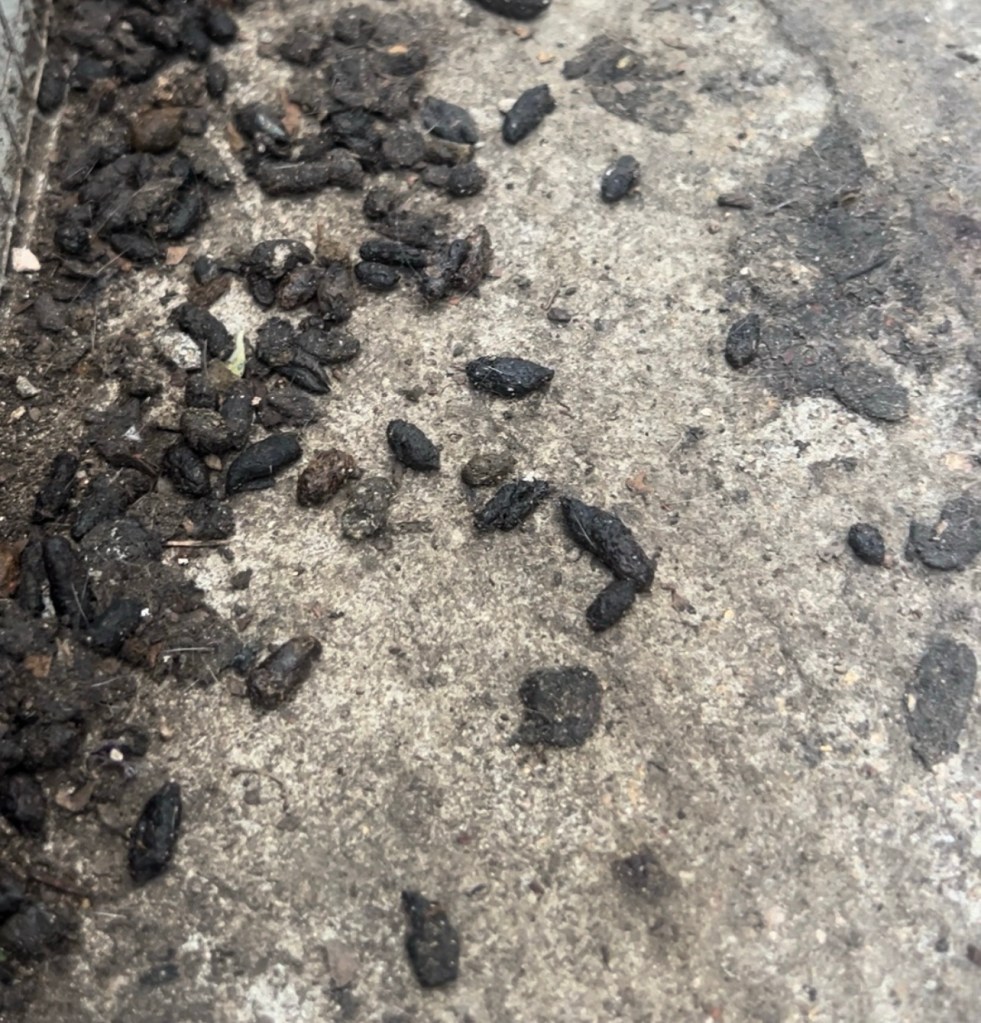
Close-up photo of rat droppings showing size and shape for identification.
Rat droppings – What they look like
Rat droppings are much larger than mouse droppings, usually around 1–2 cm long. They are shaped like capsules or sausages with blunt ends. You’ll often find them in groups, near bins, along skirting boards, or in lofts where rats travel regularly.

Close-up photo of mouse droppings showing size and pointed shape for identification.
Mouse Droppings – How to Spot the Difference
Mouse droppings are far smaller, typically only 3–8 mm long. They look like tiny black grains of rice with pointed ends. Unlike rat droppings, they are often scattered in cupboards, under sinks, or near food storage areas.
Fresh vs Old Droppings
Fresh → shiny, moist, soft to touch (don’t touch with bare hands). Old → dry, brittle, and greyish in colour. Spotting fresh droppings tells you the infestation is active and needs urgent control.
Health Risks
Both rat and mouse droppings can spread harmful bacteria and diseases. Always wear gloves and a mask if cleaning them up, and disinfect the area thoroughly afterwards.
What To Do if You Find Droppings
Identify if it’s rat or mouse. Place traps or bait suited to the species. Seal gaps and entry points to block them out. Clean and dispose of droppings safely in sealed bags.
Frequently Asked Questions About Rodent Droppings
Are rat droppings dangerous?
Yes. Rat droppings can spread bacteria such as Salmonella and Leptospira. Always wear gloves and a mask when cleaning them up.
How many droppings mean an infestation?
Even a few droppings are a sign of rodent activity. Dozens or more in one place usually means an established infestation.
Do droppings mean rodents are still present?
Fresh droppings (dark, shiny, soft) show current activity. Old droppings (grey, crumbly) may indicate past infestations, but you should still check for entry points.
Can mouse droppings be mistaken for something else?
Yes. They are sometimes confused with cockroach droppings or seeds, but mouse droppings are pointed at both ends and found near food areas.
If you’ve spotted droppings and want a proven step-by-step system to get rid of rodents fast, download my full DIY guides here:
👉 Download the Rat Control Guide
👉 Download the Mouse Control Guide
Written by Wallace Russ, a qualified pest control technician.
 NUKAPEST – DIY Pest Control Guides